Performing Umrah is a deeply meaningful journey for Muslims around the world. For a first-time pilgrim, however, the experience can also feel overwhelming. There are travel arrangements to make, documents to prepare, Ihram rules to understand, and religious rituals to learn.
This Umrah guide for first-time pilgrims is designed to make the journey easier to understand. From preparing for your departure to completing Tawaf, Sa'i, and Tahallul, we'll explain the major stages in simple language. You'll also find practical travel advice covering accommodation, transportation, packing, and common mistakes.
Religious details can vary according to the school of Islamic jurisprudence you follow. Therefore, this article should be used as a practical introduction rather than a replacement for guidance from a qualified scholar.
What Is Umrah?
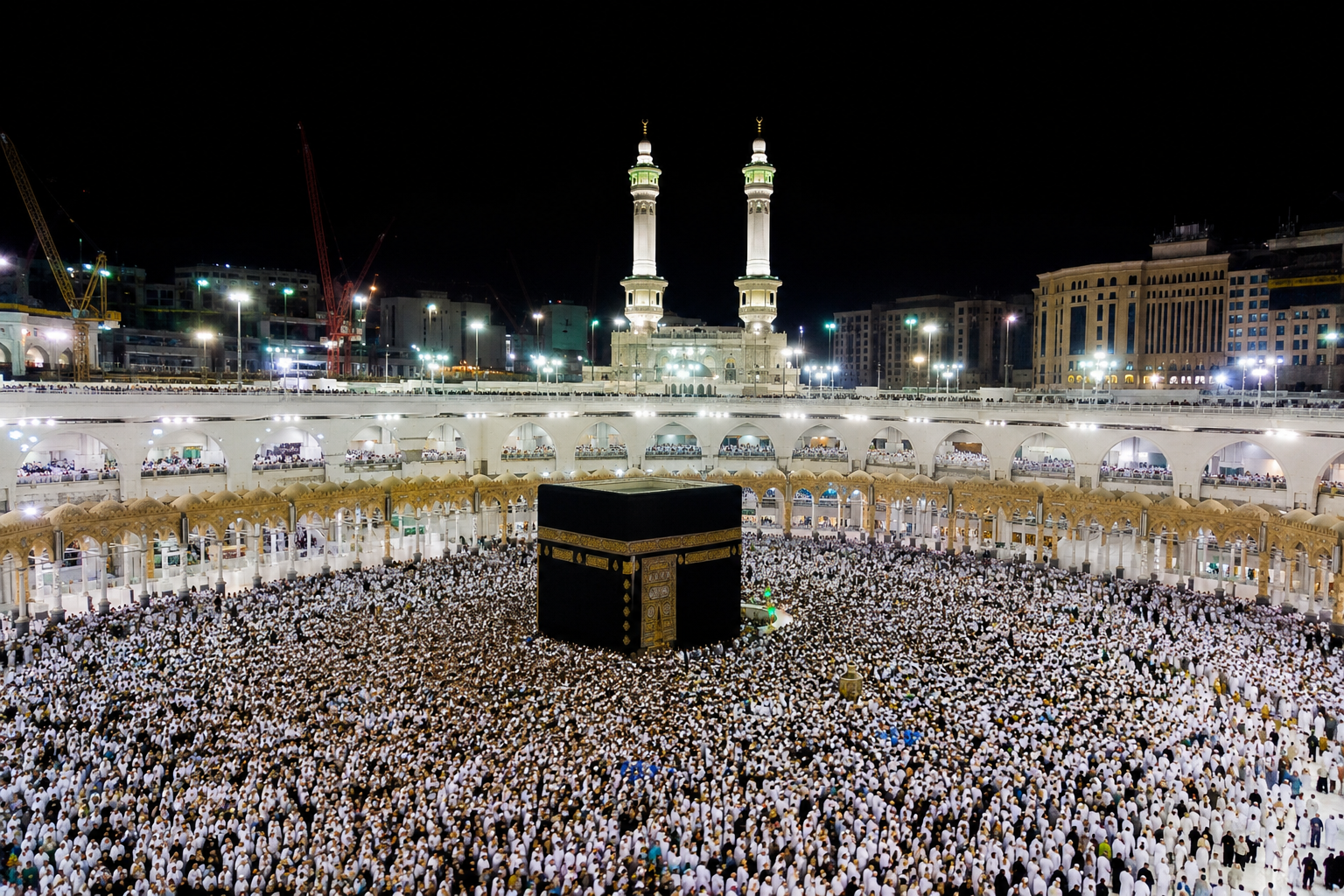
Umrah is a pilgrimage to the Holy Kaaba in Makkah that can generally be performed throughout the year outside the Hajj period, subject to Saudi regulations and seasonal arrangements.
Unlike Hajj, Umrah doesn't have the same fixed dates and extensive series of rites. Its core rituals include:
- Entering Ihram with the intention of Umrah.
- Performing Tawaf around the Kaaba.
- Performing Sa'i between Safa and Marwah.
- Cutting or shaving the hair to complete Tahallul.
Although these actions may appear simple, Umrah is much more than a physical journey. It is an opportunity to step away from everyday distractions, focus on worship, ask Allah for forgiveness, make sincere dua, and reflect on your life.
Why Is Umrah a Special Journey?
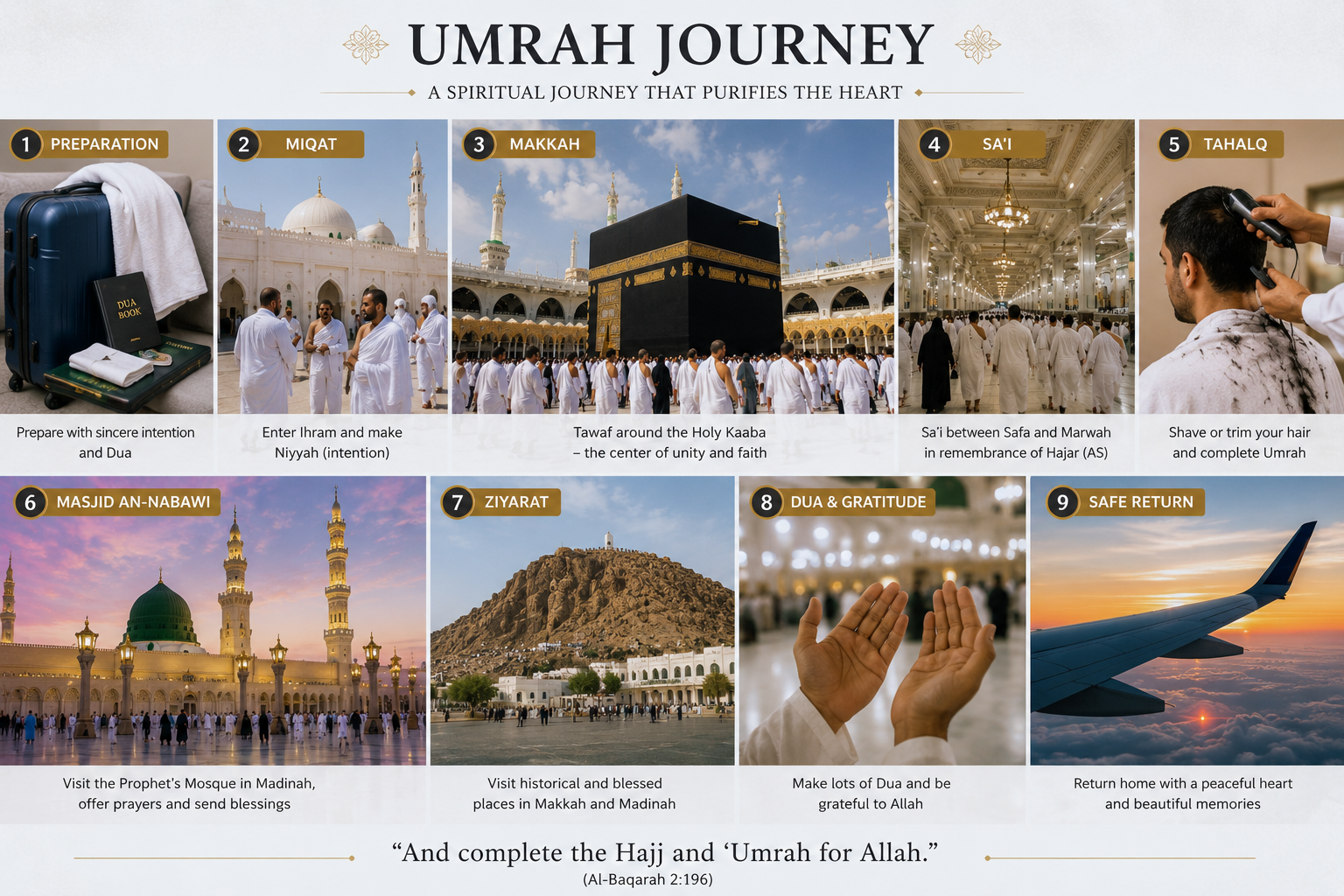
Millions of Muslims dream of seeing the Kaaba and performing Umrah. The journey combines worship, history, sacrifice, patience, and community.
You'll meet Muslims from different countries and cultures, yet everyone gathers for the same fundamental purpose: worship.
The atmosphere can be emotional, particularly when you first see the Kaaba. However, it's important not to treat Umrah simply as a sightseeing trip. Your travel arrangements matter, but your intention and worship should remain at the heart of the journey.
Prepare Spiritually Before Your Journey
A useful mindset is to prepare both physically and spiritually.
- Learn the basic Umrah rituals.
- Review the rules of Ihram.
- Learn the Talbiyah.
- Prepare your personal duas.
- Ask forgiveness from people where appropriate.
- Settle important responsibilities at home.
- Make your intention sincere.
- Prepare yourself for crowds and walking.
Preparing for Your Umrah Journey
Before You Travel for Umrah
Good preparation can make a huge difference. Don't leave everything until the last minute. Ideally, begin preparing several weeks before your departure.
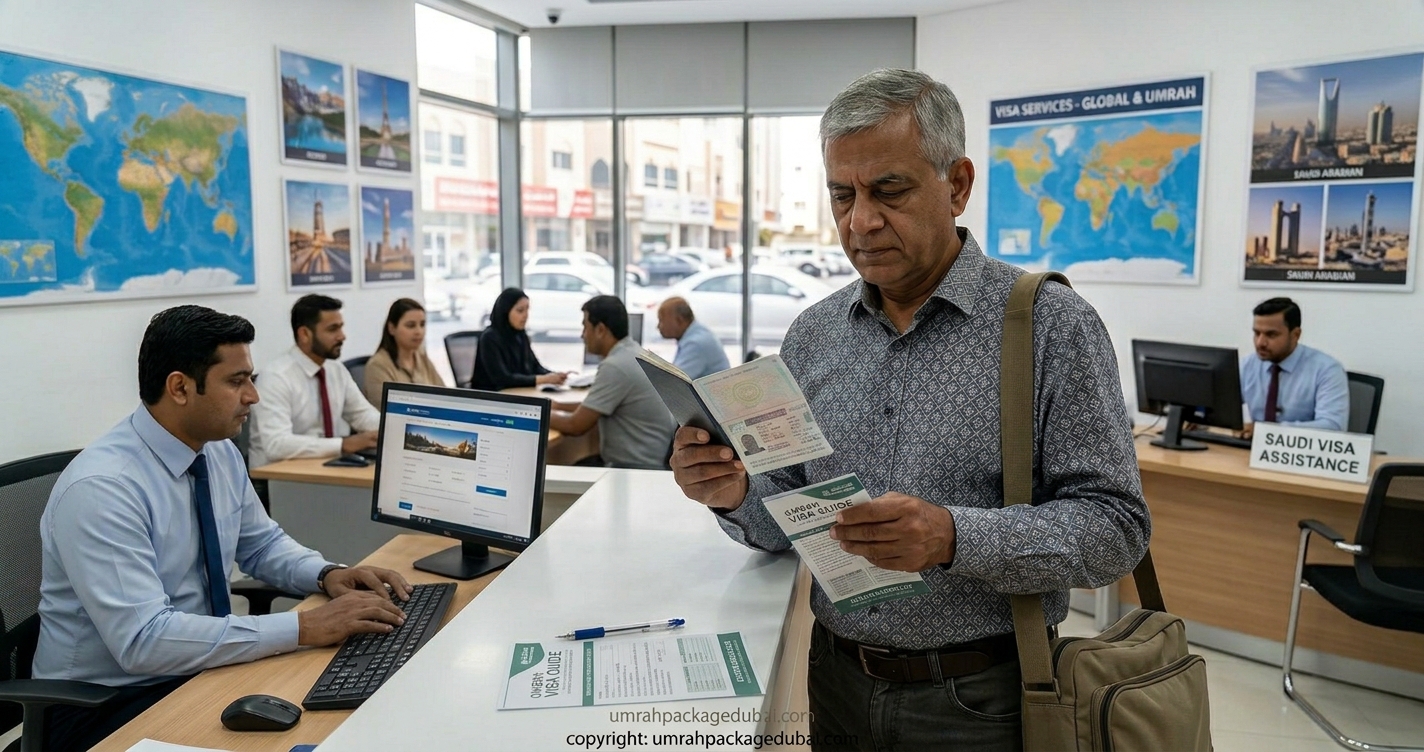
Start by checking your passport, visa requirements, flights, hotel reservations, transportation, and other travel documents.
If you're traveling with family, organize everyone's documents together while keeping copies separately.
Four Important Areas of Umrah Preparation
- Religious preparation: Understand the basic rituals and Ihram requirements.
- Travel preparation: Arrange flights, accommodation, transportation, and necessary documents.
- Physical preparation: Walking is an important part of the journey, so gradually become comfortable with longer walks.
- Mental preparation: Expect crowds, queues, delays, and changes in plans. Patience is part of the journey.
Documents You Need for Umrah
Your exact requirements depend on your nationality, residence, visa type, travel arrangements, and current Saudi regulations.
Common documents may include:
- Valid passport.
- Saudi visa or relevant travel authorization.
- Flight tickets.
- Hotel confirmation.
- Transportation details.
- Travel insurance where applicable.
- Identification documents.
- Emergency contact information.
- Copies of important documents.
Before traveling, always verify the latest requirements through official Saudi sources rather than relying on an old social media post or outdated blog.
What Should You Pack for Umrah?
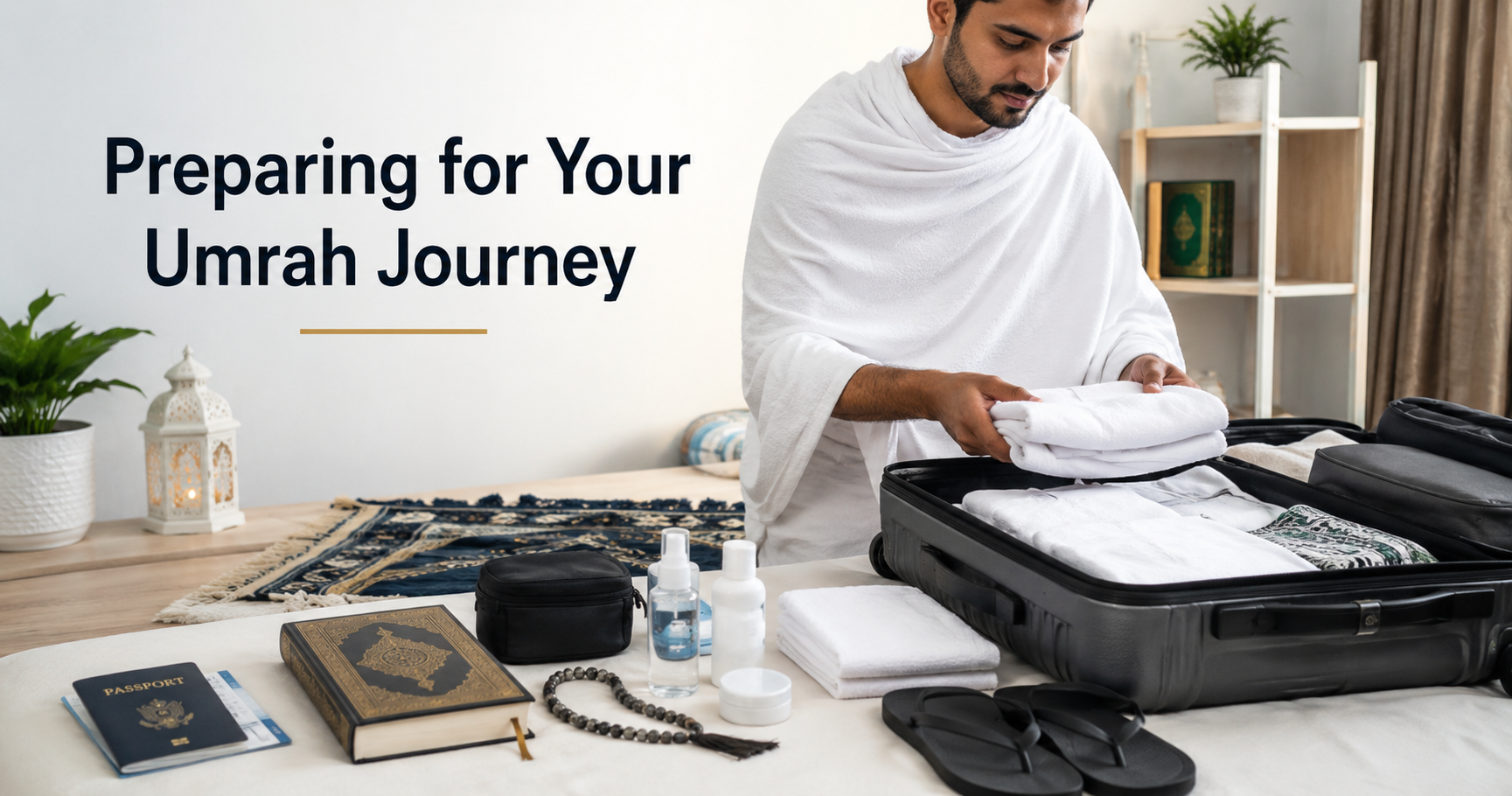
Packing light is usually a smart approach. You don't need to take your entire wardrobe with you. Focus on essential clothing, documents, medication, electronics, and personal items.
Essential Umrah Packing List
- Passport and travel documents.
- Mobile phone.
- Phone charger.
- Power bank.
- Comfortable walking shoes.
- Sandals.
- Personal medicines.
- Toiletries.
- Unscented personal-care products for Ihram.
- Small bag for essential items.
- Reusable water bottle where permitted.
- Small amount of local currency.
- Copies of important documents.
What Should Men Pack for Ihram?
Men normally need two pieces of Ihram cloth. It's wise to carry an additional Ihram set if your luggage allows it.
What Should Women Wear for Umrah?
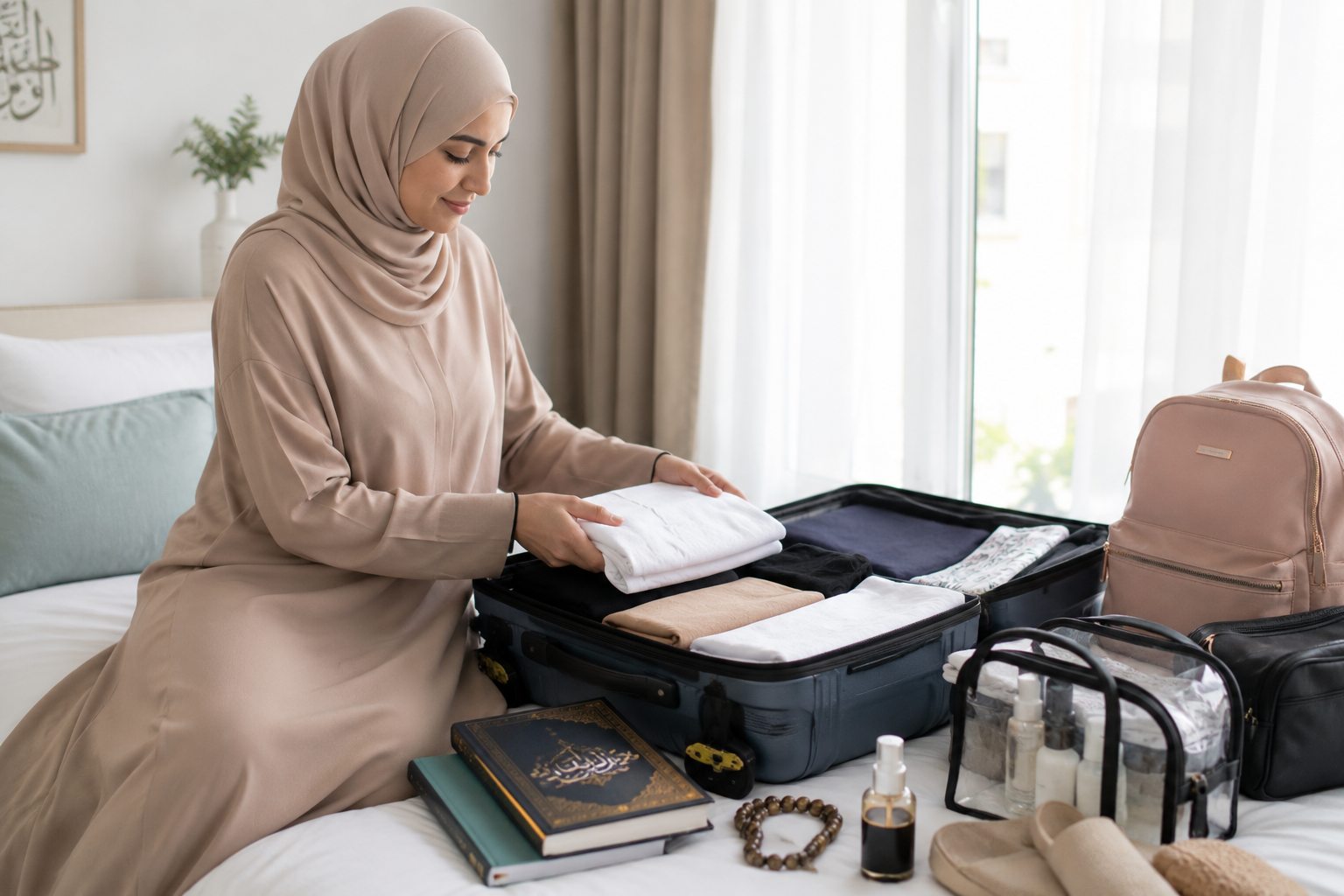
Women don't wear the two-piece male Ihram garment. They generally wear normal modest Islamic clothing while observing the relevant rules of Ihram.
Because specific religious rulings can differ, women should confirm details with a knowledgeable scholar before traveling.
Understanding Ihram for Umrah
Ihram refers to the sacred state a pilgrim enters when intending to perform Umrah or Hajj.
People often use the word "Ihram" to describe the clothing, particularly for men, but Ihram is more than clothing. It is a state of worship with specific restrictions.
Before entering Ihram, pilgrims should learn the applicable restrictions and prepare themselves appropriately.
For men, the traditional Ihram clothing consists of two unstitched pieces of cloth. Women generally wear ordinary modest clothing rather than a special two-piece garment.
The intention is essential. The pilgrim intends to perform Umrah and then recites the Talbiyah.
What Is Miqat for Umrah?
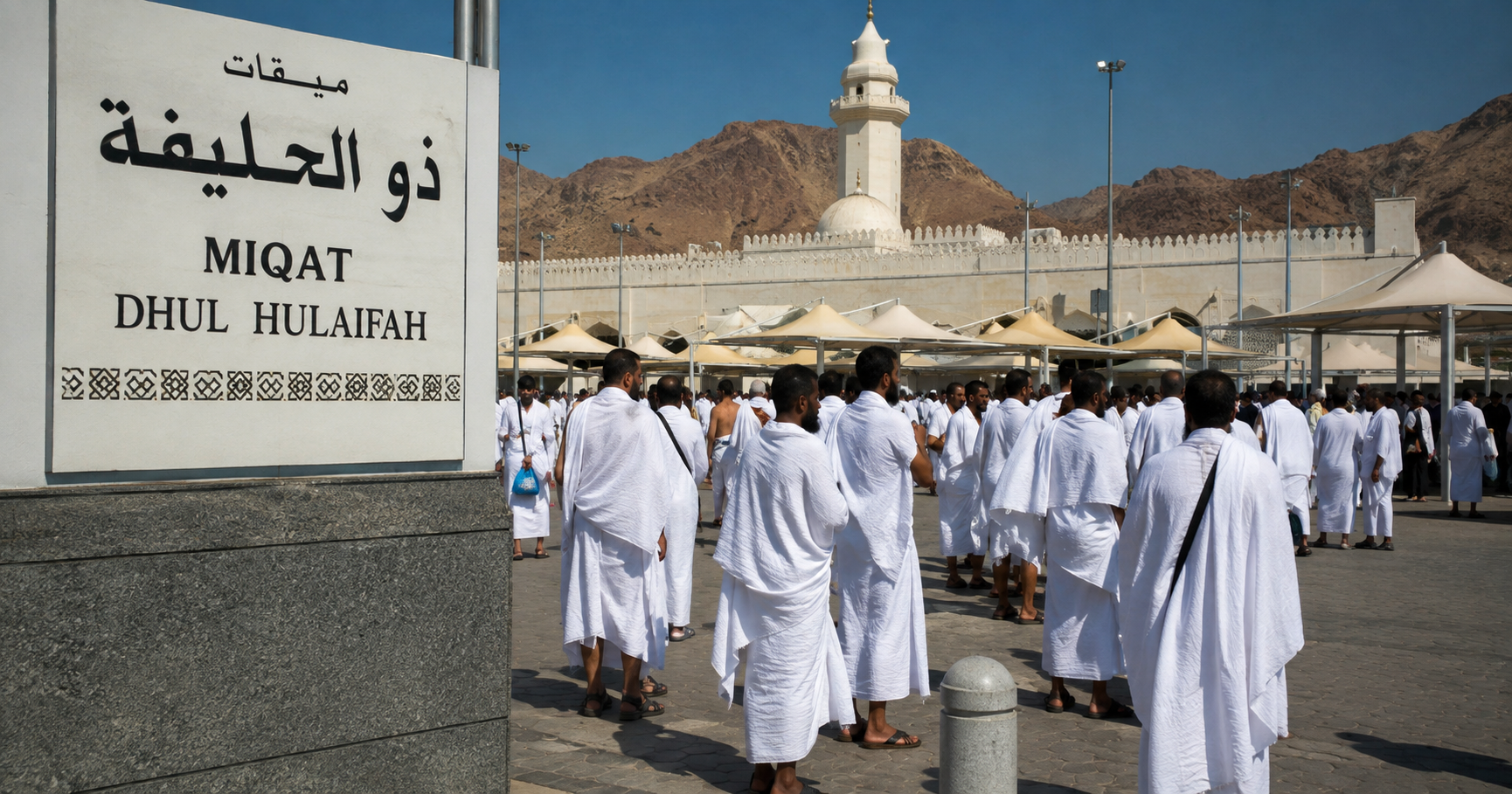
Miqat is the designated boundary associated with entering Ihram for pilgrims intending to perform Umrah.
A pilgrim who intends to perform Umrah must take the relevant Miqat into account before crossing it. The appropriate Miqat depends on the pilgrim's route.
For example, pilgrims traveling through Madinah use the Miqat of Dhul-Hulayfah, also known as Abyar Ali. Other routes have different Miqat locations.
If you're flying to Saudi Arabia, ask your airline, tour operator, or qualified scholar about when and where you should enter Ihram.
This is one area where planning ahead is particularly important.
How to Perform Umrah Step by Step
Step 1: Make the Intention for Umrah
After reaching the appropriate point for Ihram, make the sincere intention to perform Umrah.
The pilgrim then recites the Talbiyah according to the prescribed practice.
Men generally recite the Talbiyah audibly, while women recite it quietly enough for themselves to hear.
Step 2: Enter the State of Ihram
Once you've entered Ihram, observe the applicable restrictions until you complete the Umrah and reach Tahallul.
This is why it's useful to learn the rules before leaving home. Don't wait until you're standing at the Miqat trying to understand everything from a phone screen.
If you aren't sure about a particular issue, ask a qualified scholar or knowledgeable guide.
Tawaf: The First Major Ritual
Step 3: Perform Tawaf Around the Kaaba
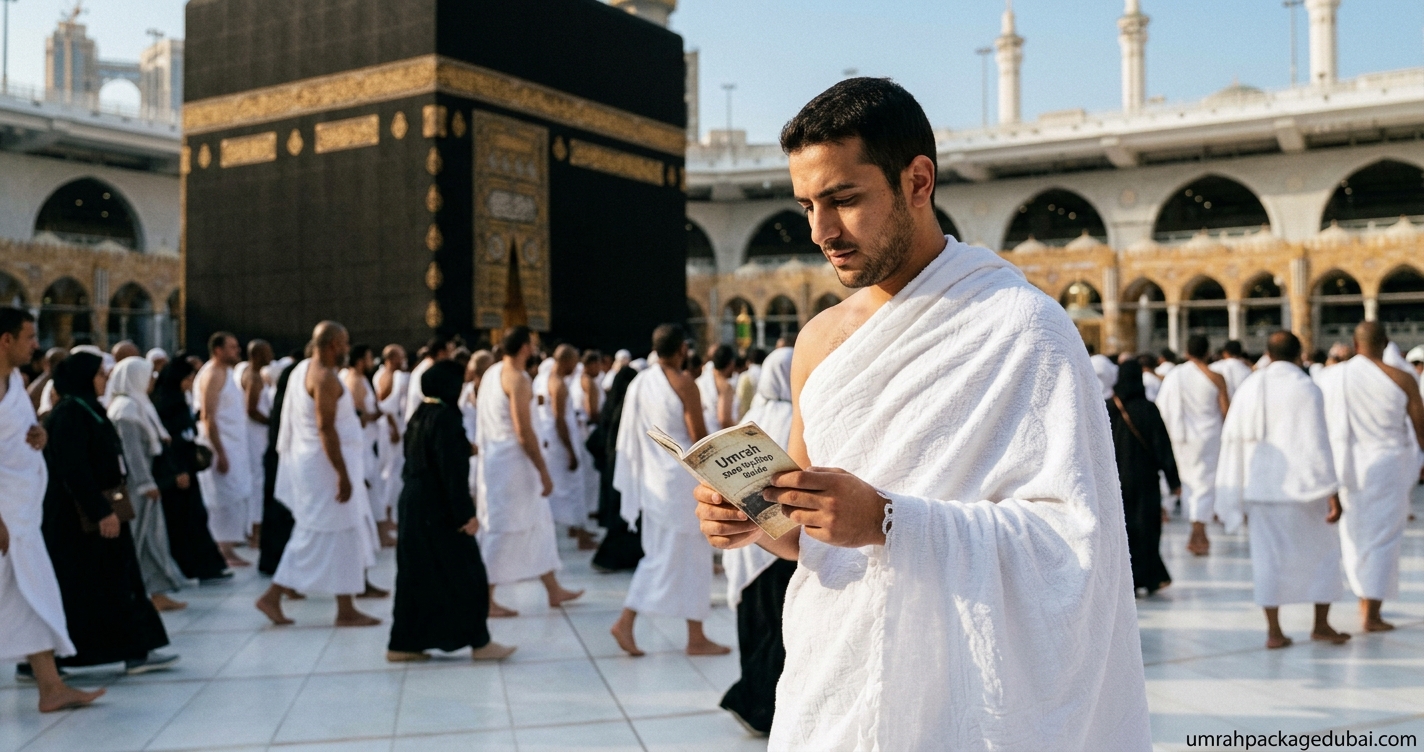
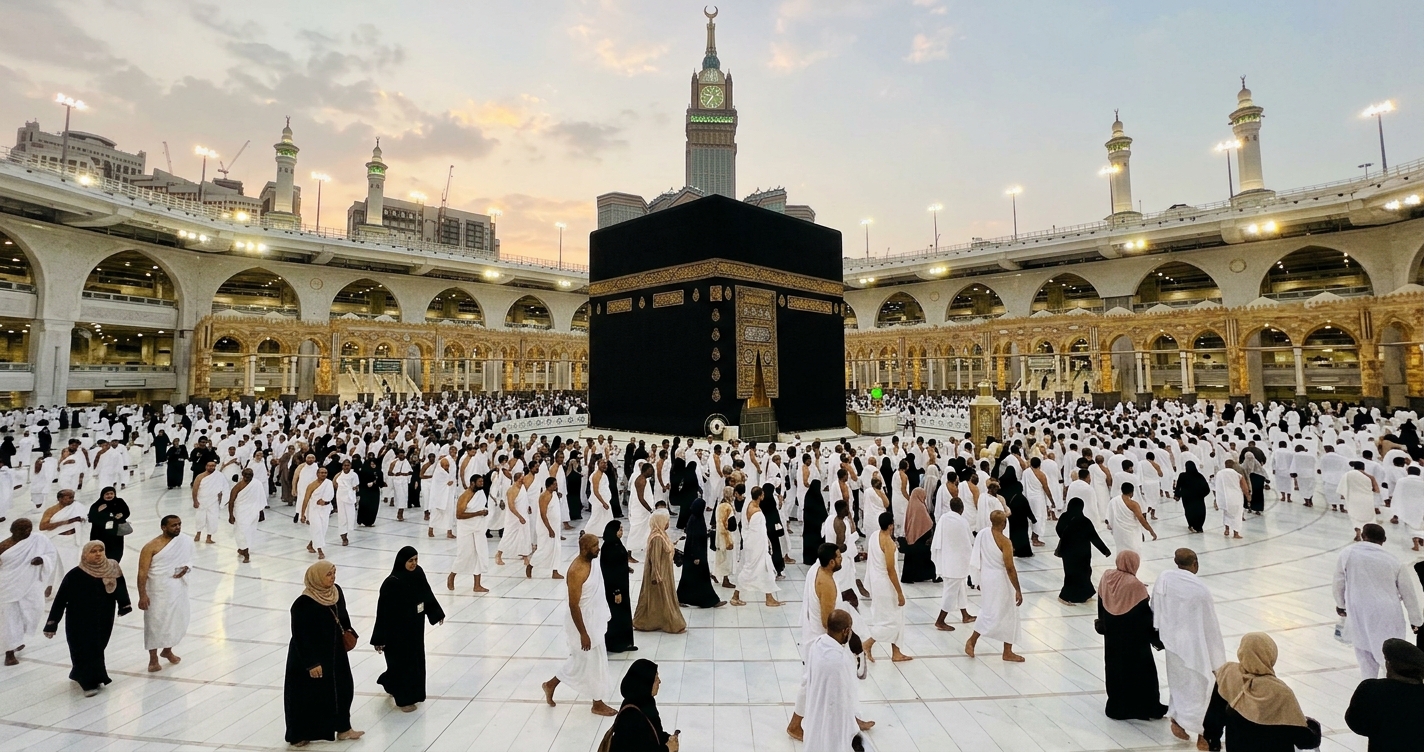
Tawaf consists of seven circuits around the Kaaba. You begin from the area aligned with the Black Stone and proceed around the Kaaba in a counterclockwise direction.
Take your time. Crowds can be heavy, especially during peak periods. Don't push or harm other pilgrims in an attempt to reach the Black Stone.
Important Tawaf Tips
- Walk calmly and avoid pushing other pilgrims.
- Focus on worship rather than taking photographs throughout the Tawaf.
- Make dua according to your ability and knowledge.
- Stay with your family or group if you're traveling together.
- Don't become stressed about memorizing a different dua for every round.
One of the biggest mistakes first-time pilgrims make is becoming so concerned about memorizing specific words that they lose concentration. Keep your worship sincere and manageable.
Sa'i Between Safa and Marwah
Step 4: Perform Sa'i
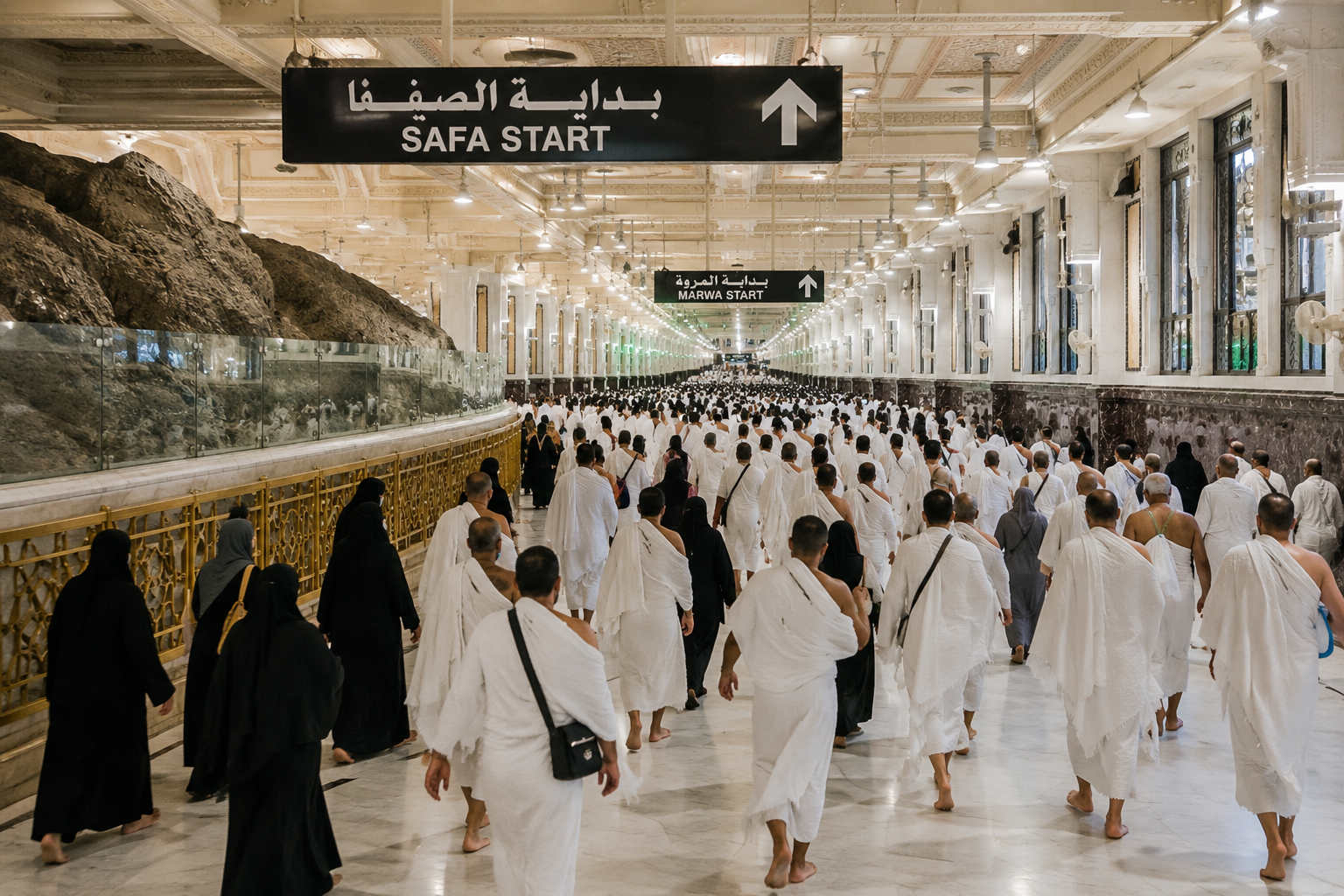
After Tawaf, pilgrims perform Sa'i between Safa and Marwah.
Sa'i commemorates the journey associated with Hajar (peace be upon her) as she searched for water.
You travel between Safa and Marwah seven times, beginning at Safa and finishing at Marwah.
Practical Sa'i Advice
Sa'i requires walking, so comfortable footwear and appropriate hydration planning can be helpful.
- Move at your own pace.
- Take breaks when needed.
- Stay aware of people around you.
- Keep essential items secure.
- Follow the instructions provided by authorities.
If you're elderly, traveling with children, or have mobility difficulties, learn about available assistance and transportation options before your journey.
Completing Umrah With Tahallul
Step 5: Cut or Shave the Hair
After completing Sa'i, the final major step is cutting or shaving the hair.
For men, shaving the head or shortening the hair are recognized options, with the applicable rulings depending on the circumstances and school of jurisprudence.
Women generally cut a small portion of their hair according to the applicable Islamic ruling.
Once this stage is completed, the pilgrim exits the state of Ihram.
At this point, your Umrah has been completed.
Congratulations—but don't rush away emotionally. Take a moment to make dua and thank Allah for allowing you to complete the journey.
What to Do After Completing Umrah
Rest, Reflect, and Continue Worship
After Umrah, many pilgrims feel physically tired. That's completely understandable.
You may have traveled for hours, walked long distances, waited in crowds, and completed demanding rituals.
Give yourself time to rest. If you're staying in Makkah, you can continue praying in Masjid al-Haram and spend time in worship.
Remember that your Umrah doesn't have to be followed by a packed sightseeing schedule. Sometimes a slower day is better.
Visiting Madinah After Umrah
Why Visit Madinah?
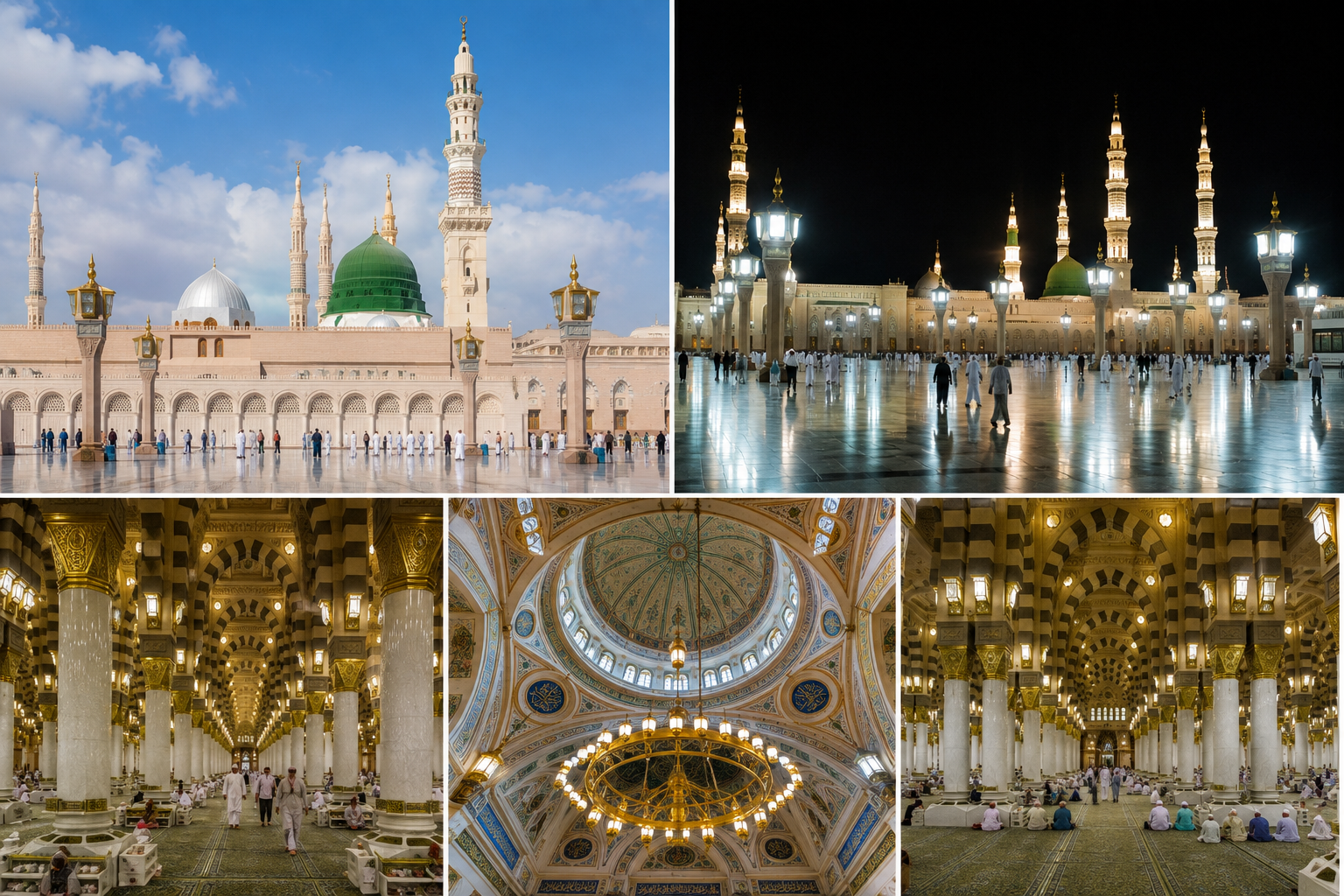
Many pilgrims also visit Madinah during their Saudi Arabia journey.
Madinah is home to the Prophet's Mosque, Al-Masjid an-Nabawi. A visit to Madinah is deeply meaningful for Muslims, but it is important to understand that visiting Madinah is not one of the essential rites of Umrah itself.
If your itinerary includes Madinah, plan your accommodation and transportation carefully. Allow enough time to pray, rest, and visit appropriate historical sites without turning the experience into a rushed tour.
Common Umrah Mistakes to Avoid
1. Leaving Preparation Until the Last Minute
Last-minute planning can create unnecessary stress. Prepare your documents, accommodation, transportation, and religious knowledge before departure.
2. Not Understanding Miqat
If you're traveling by air or road, know where and when you need to enter Ihram.
3. Overpacking
You probably don't need a huge suitcase. Pack only what you'll actually use.
4. Spending Too Much Time on Your Phone
Your phone is useful for navigation and communication, but don't let it dominate your worship.
5. Pushing During Tawaf
Never put yourself or others at risk just to get closer to the Kaaba or Black Stone.
6. Trying to Memorize Too Many Duas
Learn the basics and make sincere personal dua without becoming overwhelmed.
7. Ignoring Rest
Fatigue can affect your ability to worship comfortably. Rest when your body needs it.
8. Following Unverified Social Media Advice
Religious and regulatory information can change. Use reliable official sources whenever possible.
Practical Tips for a Comfortable Umrah
Choose Accommodation Carefully
Hotel location can make a major difference to your Umrah experience.
A cheaper hotel farther away may save money but require more transportation and walking. A hotel closer to the Haram can cost more but may be particularly valuable for elderly travelers or families with children.
When comparing an Umrah package, look beyond the headline price.
| What to Check | Why It Matters |
|---|---|
| Hotel location | Reduces travel time and unnecessary walking |
| Room occupancy | Determines comfort and total package value |
| Number of nights | Helps you compare packages accurately |
| Transportation | Important for airport and intercity transfers |
| Visa services | Confirms what is included in the package |
| Meals | Check whether food is included or separate |
| Cancellation conditions | Important if your plans change |
| Customer support | Useful when assistance is needed during travel |
Plan Your Daily Umrah Schedule
Don't create an exhausting itinerary. A simple schedule can help you balance worship and rest.
Example Daily Schedule
- Morning: Prayer, breakfast, and rest.
- Afternoon: Rest, meals, and light activities.
- Evening: Prayer and worship.
- Night: Rest and preparation for the next day.
The ideal schedule depends on your age, physical ability, hotel location, travel companions, and personal preferences.
Stay Connected With Your Umrah Group
If you're traveling as part of a group, establish a meeting point before entering crowded areas.
Make sure everyone has:
- Hotel name.
- Hotel address.
- Group leader's phone number.
- Emergency contact.
- Transportation details.
For elderly family members, consider giving them a card containing essential information. Small preparations like these can save a lot of trouble later.
Official Resources for Umrah Pilgrims
Because Saudi regulations, visa procedures, services, and operational arrangements can change, pilgrims should check official sources before traveling.
The Umrah Package Dubai Website platform provides information about Umrah services and packages under the supervision of the Ministry of Hajj and Umrah.
Visit For Umrah Booking From Dubai
Frequently Asked Questions About Umrah
1. What is the easiest way to learn how to perform Umrah?
Start with the four major stages: Ihram and intention, Tawaf, Sa'i, and Tahallul. Then study the specific rules applicable to your situation. Official Saudi guides and a qualified scholar can help you understand the details.
2. How many times do you perform Tawaf during Umrah?
The main Tawaf of Umrah consists of seven circuits around the Kaaba.
3. How many times do you walk between Safa and Marwah?
Sa'i consists of seven trips between Safa and Marwah, beginning at Safa and ending at Marwah.
4. Do I need special Ihram clothes for Umrah?
Men normally wear the traditional two-piece Ihram garment. Women generally wear modest regular clothing while observing the applicable rules of Ihram.
5. Can I perform Umrah throughout the year?
Umrah can generally be performed throughout the year outside the Hajj period, but Saudi authorities may introduce specific seasonal regulations, restrictions, or access arrangements. Always check current official guidance.
6. Do I have to visit Madinah to complete Umrah?
No. Visiting Madinah is not one of the essential rites required to complete Umrah.
7. What should I take to the Haram?
Carry only what you need, such as your phone, identification, necessary medication, and a small amount of cash. Avoid carrying unnecessary valuables.
8. Can elderly people perform Umrah?
Yes, many elderly people perform Umrah. However, the physical demands of walking and crowds should be considered carefully. Plan transportation and assistance in advance where needed.
9. Should I book an Umrah package or arrange everything myself?
That depends on your experience, budget, nationality, travel arrangements, and comfort level. A package can simplify accommodation, transportation, visa-related services, and support, while independent planning may provide more flexibility.
10. What is the most important advice for a first-time pilgrim?
Prepare before you travel, understand the basic rituals, follow current official regulations, remain patient, and keep your intention focused on worship.
Conclusion: Make Your Umrah Journey Meaningful
Your first Umrah can be one of the most memorable journeys of your life.
The key is preparation.
Learn the rituals before you travel. Understand Ihram and Miqat. Organize your documents. Choose suitable accommodation. Plan transportation. Pack sensibly. Most importantly, prepare your heart.
Don't worry if you don't know everything on your first day. Ask questions, follow reliable guidance, and be patient with yourself and with other pilgrims.
Remember that Umrah isn't a race. The goal isn't simply to complete the physical steps as quickly as possible. It's an opportunity for worship, reflection, gratitude, and spiritual renewal.
With the right preparation and a calm mindset, your Umrah journey can be far more comfortable and meaningful.
May Allah accept the Umrah of every pilgrim, make the journey easy, accept their duas, and return them home safely.
Planning Your Umrah From Dubai?
If you're planning your spiritual journey from the UAE, compare your Umrah packages from Dubai, Umrah visa services, flights, hotels, and transportation before booking.
Start planning your Umrah journey today and choose a package that suits your budget, schedule, and travel needs.